
What Is Insulin Resistance? Why It Blocks Weight Loss (and How to Reverse It)
If you're eating less, exercising more, and still struggling to lose weight, insulin resistance may be the real issue — not a lack of willpower.
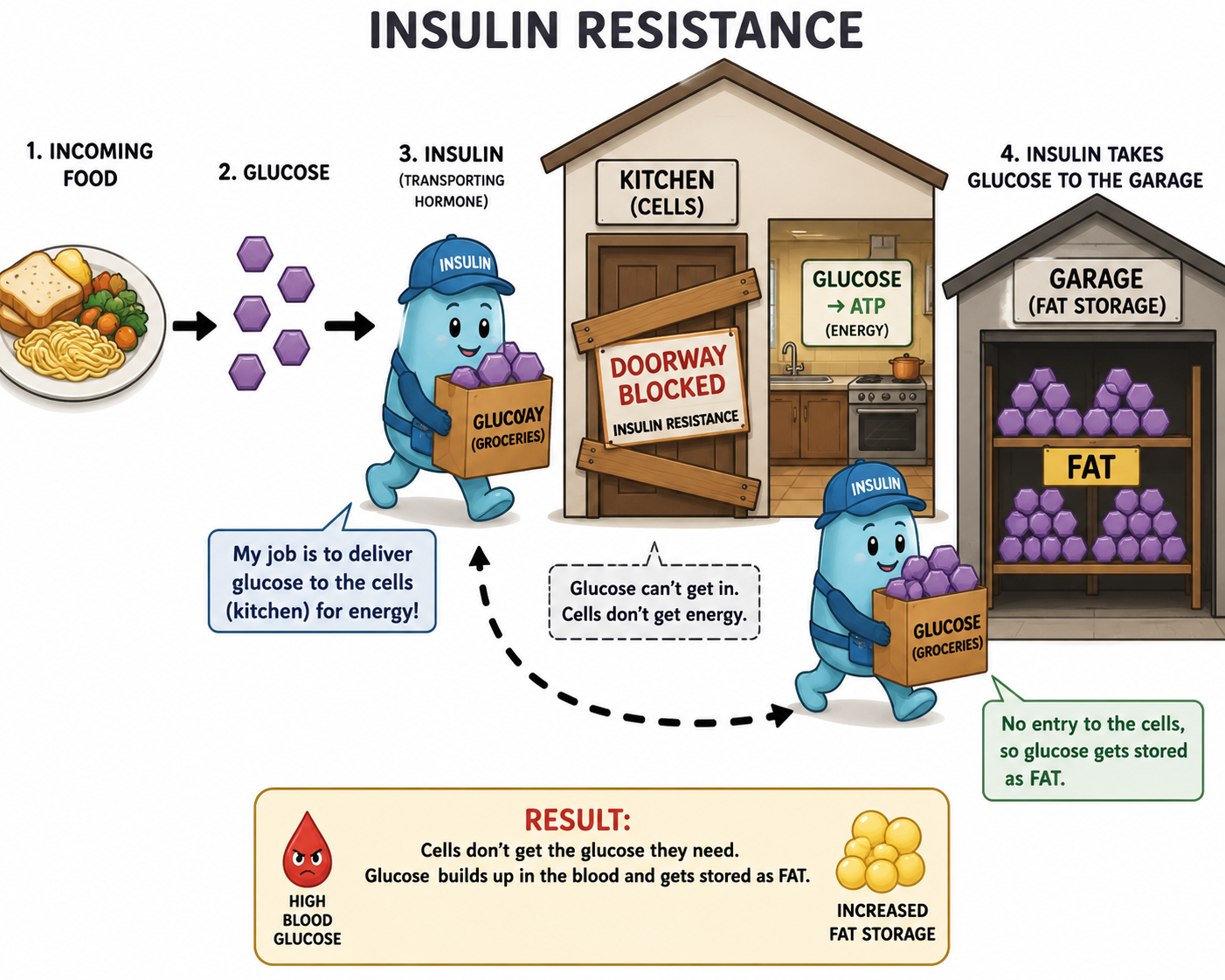
What Is Insulin Resistance?
Insulin resistance means your cells stop responding normally to insulin, so your pancreas produces more of it to keep your blood sugar in check. And high insulin is a problem — because insulin is a fat-storage hormone. When it stays elevated, your body is told to store energy as fat instead of burning it. That's why insulin resistance doesn't just stall your weight loss; it actively works against it.
Here's what's happening in plain terms. You eat. Your blood sugar rises. Your pancreas releases insulin to move that sugar into your cells for energy. When your cells resist the signal, your pancreas has to pump out more and more insulin to get the same result. Over time, that extra insulin tells your body to hold onto fat — especially around your middle — while you feel tired, hungry, and frustrated despite trying to do everything right.
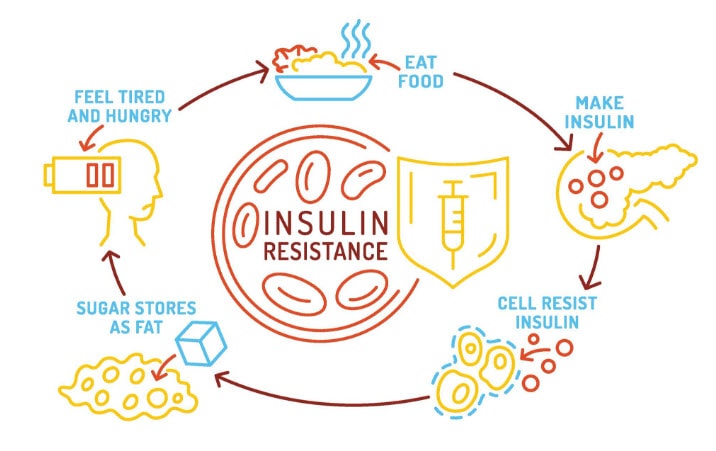
Why Insulin Resistance Blocks Weight Loss
When insulin is high, your body is in fat-storage mode, not fat-burning mode. That means even when you cut calories, your metabolism fights back — it holds onto fat and slows down how quickly you burn energy. It's not your fault. It's biology. And it's a common reason people in Oklahoma City who've tried every diet still can't move the scale.
The worsening cycle looks like this: the more insulin-resistant you are, the more insulin your body produces, which makes you more resistant, which makes weight loss harder. Breaking that cycle is the whole point — and it's something dieting alone rarely does, because dieting doesn't address the hormone driving the problem.
Signs You May Have Insulin Resistance
Many people don't realize insulin resistance is behind their struggles. Here are the signs to watch for:
- Weight that settles around your belly, not your hips or thighs.
- Fatigue or a crash after meals.
- Constant cravings for sugar and carbohydrates.
- Difficulty losing weight even in a calorie deficit.
- Dark, velvety patches of skin, often on the neck.
- High fasting blood sugar on recent lab work.
If several of these sound familiar, it's worth testing — not guessing. A fasting glucose and fasting insulin reading will tell you more than a symptom checklist ever will.
How to Reverse Insulin Resistance in OKC
The good news is insulin resistance can be reversed. The work is twofold: lower the amount of insulin your body needs to produce, and help your cells respond to it again. That combination is exactly what a medically supervised program addresses — and it's why "eat less and move more" keeps failing people who don't fix the underlying hormone first.
There are two main pathways, and the right one depends on your body:
GLP-1 weight loss injections lower blood sugar and improve insulin sensitivity by helping your cells respond to insulin again. If insulin resistance is severe, this is often the fastest lever.
Natural lipotropic drops support your metabolism and help reset the hormones — including insulin — that drive fat storage. This is the non-medication path for people who prefer to start natural.
Beyond medication, red light therapy and whole-body cryotherapy support recovery, reduce inflammation, and help the body return to a healthier metabolic state — useful additions to either pathway.
And the only way to know if it's working is to measure it. That's why we use lab work that targets the markers insulin resistance actually shows up in: fasting glucose, fasting insulin, hemoglobin A1c, and leptin. You'll see your numbers move as your body responds.
Frequently Asked Questions
Honest answers about insulin resistance, weight loss, and what actually works.
If this sounds like you — eating less, exercising more, and still stuck — insulin resistance may be the reason. We'd rather test it than guess.
Book a Free Consult